
Japan 2026
I took part in the second KonMari retreat in Japan in May 2026. It was so nice to see my KonMari friends again! This time, I went there a day ahead of time so that I would be able to visit a few things in Kyoto before the program officially started, and I got to do that with like-minded friends.

First, we went to Arashiyama bamboo forest. I will tell you right now the secret to getting pictures with hardly anyone in them: go as soon as the sun rises! Many attractions, like temples, open at sunrise (the bamboo grove is actually open 24 hours a day). If you are coming from North America, chances are you will be jet-lagged and wide awake at 4:00am anyway, so why not go out and visit something before breakfast? We left the forest around 7:00am and it was already getting crowded then. After a stop at out hotel for breakfast and some rest, we went out again to explore and shop at Le Labo, Uniqlo, a stationery store, My Only Fragrance, Nishiki Market, Gion District… I spent the rest of the day doing intuitive wandering, and it was great.
The next day, we started the official KonMari program at Ryosokuin Temple – we met Toryo Ito, a Zen monk who led us in a zazen meditation. It was by far my best medication experience! Not only did time fly, I also got to use my sense of smell more than expected (it turns out that the monk was using a room spray made with items gathered from the temple’s garden, and if I had realized that I could purchase it on site I totally would have!). He also used singing bowls, which at one point made my whole body vibrate, and it felt like the sound was physically going around in my head. He actually has a playlist for meditating, if you are interested.
When asked what his typical day looks like, he stated that he gets up around 4:00am each day, then takes some time for his morning ablutions and come to the temple to meditate for an hour. He goes home around 6:00am to help get his kids ready for school. He then comes back to the temple and cleans for about an hour (he prefers cleaning a bit each day instead of doing deep cleanings less often). And then… he records his podcast and posts on social media for his other employer, a skincare company.
One thing that stood out from our conversation is that when you ignore the details of your decisions, that’s when clutter builds up. When you pay attention to the little things, you tend to care more about putting them away or deciding whether to keep them in the first place.
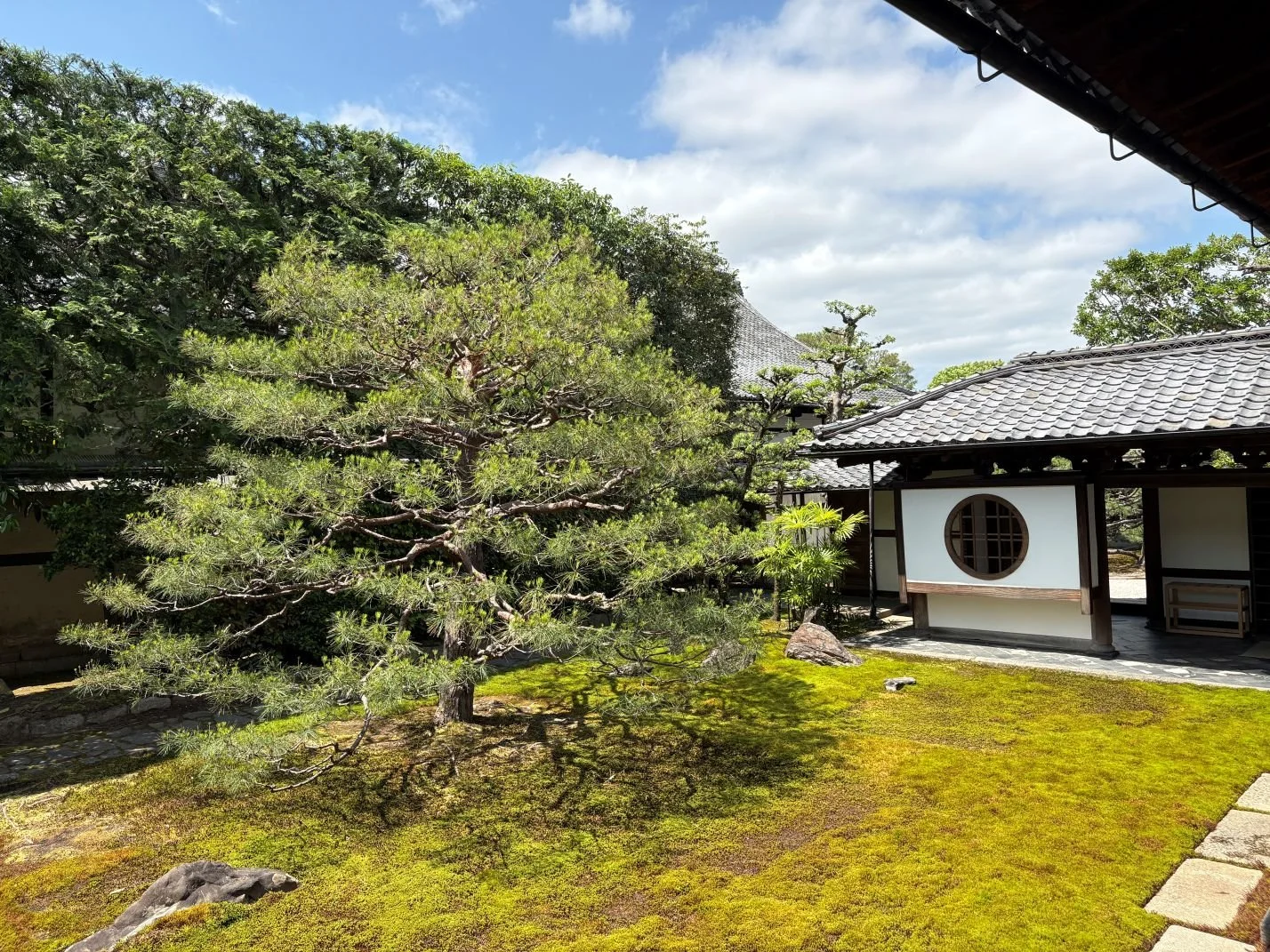
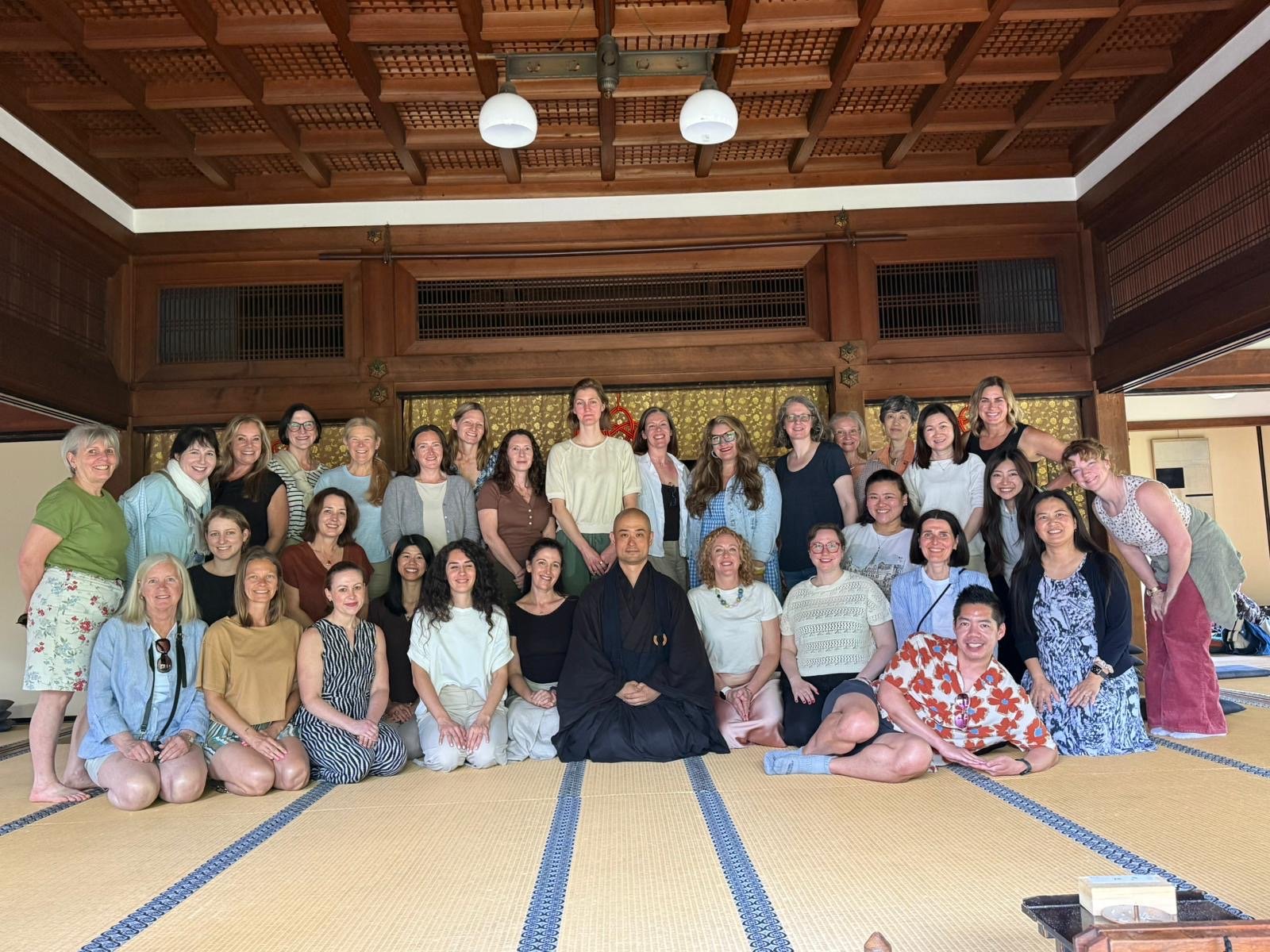
Image courtesy of Solana Deguchi
After this, we made our way north and spent a few days at a ryokan, Hatori, where I finally dared to try the onsen. I hadn’t tried it during my first stay in Japan because being naked in “public” was too far out of my comfort zone, but this time I decided to be brave and just go for it. I really enjoyed the experience!
We then had a day of workshops focused on tokimeki. I can’t post the contents, but ask me about tokimeki during a session and I’ll help you find what sparks joy!
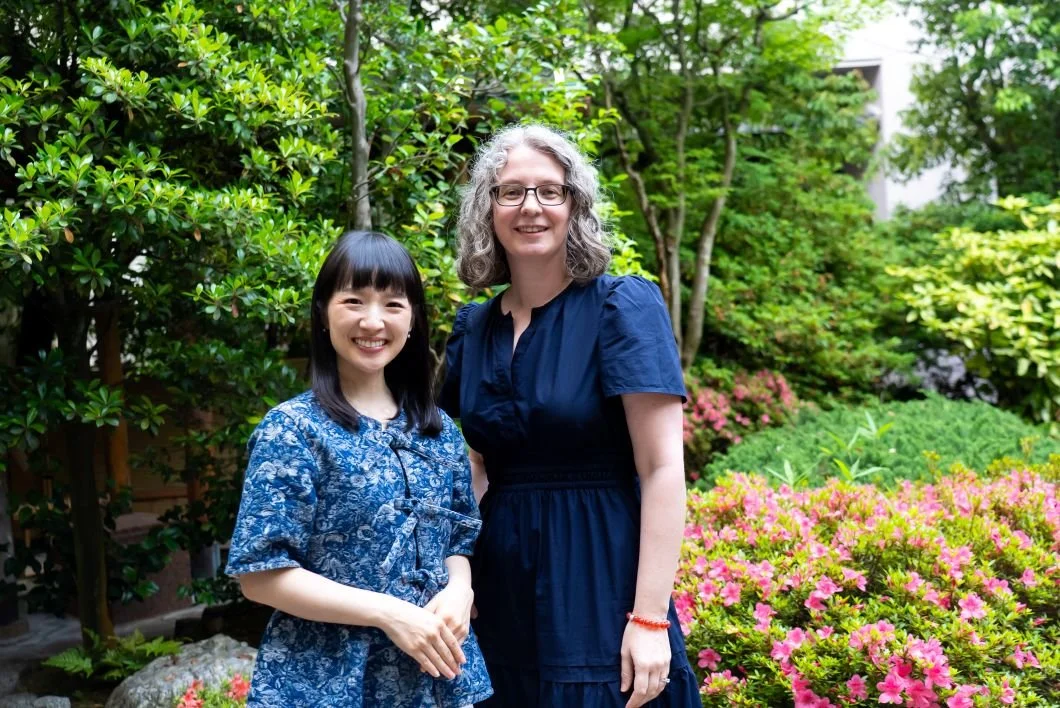
Image courtesy of KonMari Media, Inc.
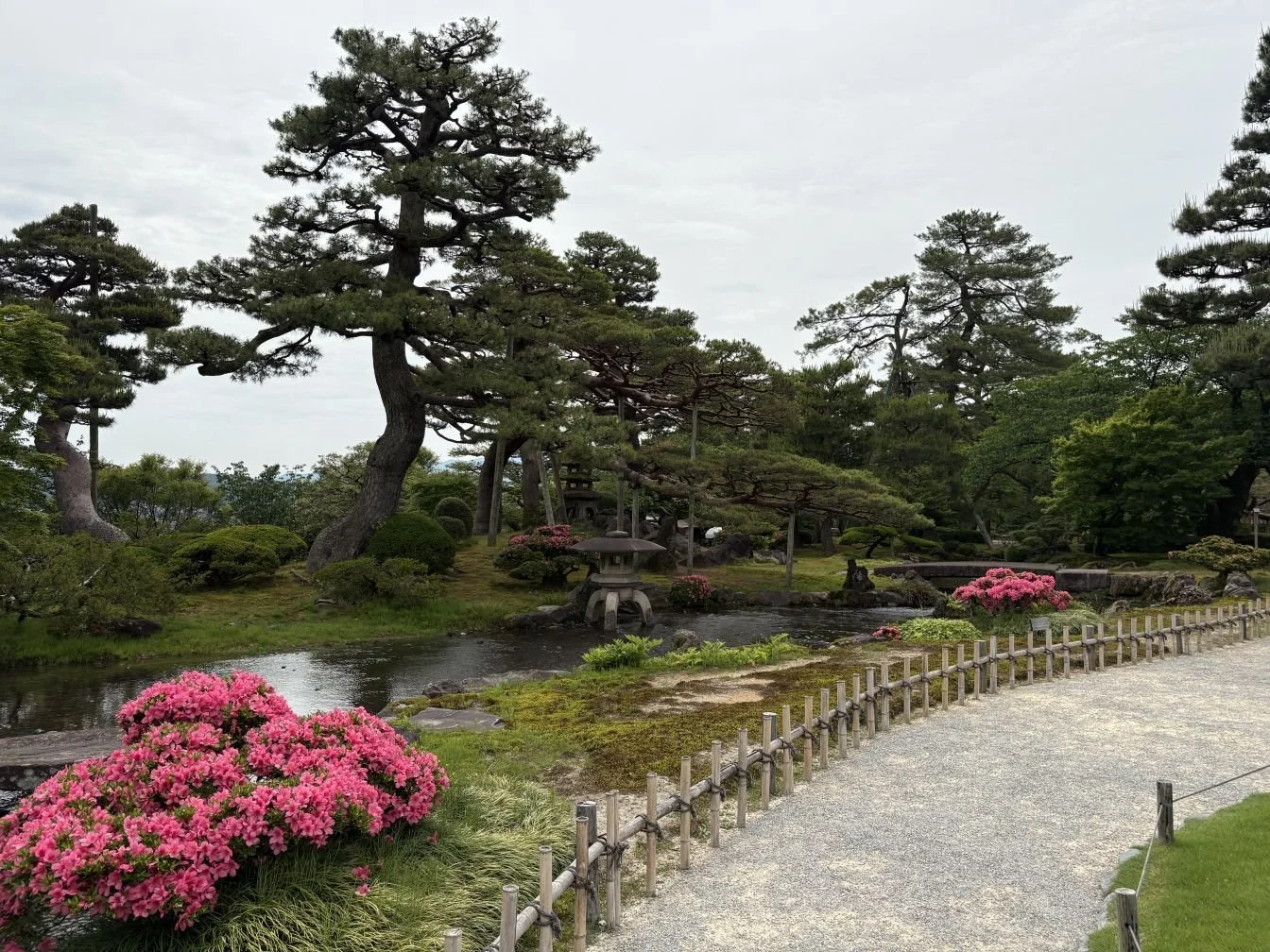
We continued our trip by visiting Kenrokuen Garden in Kanazawa. It is said to be the third-most beautiful garden in Japan, and I just love a country that rates its gardens! It was indeed absolutely beautiful.
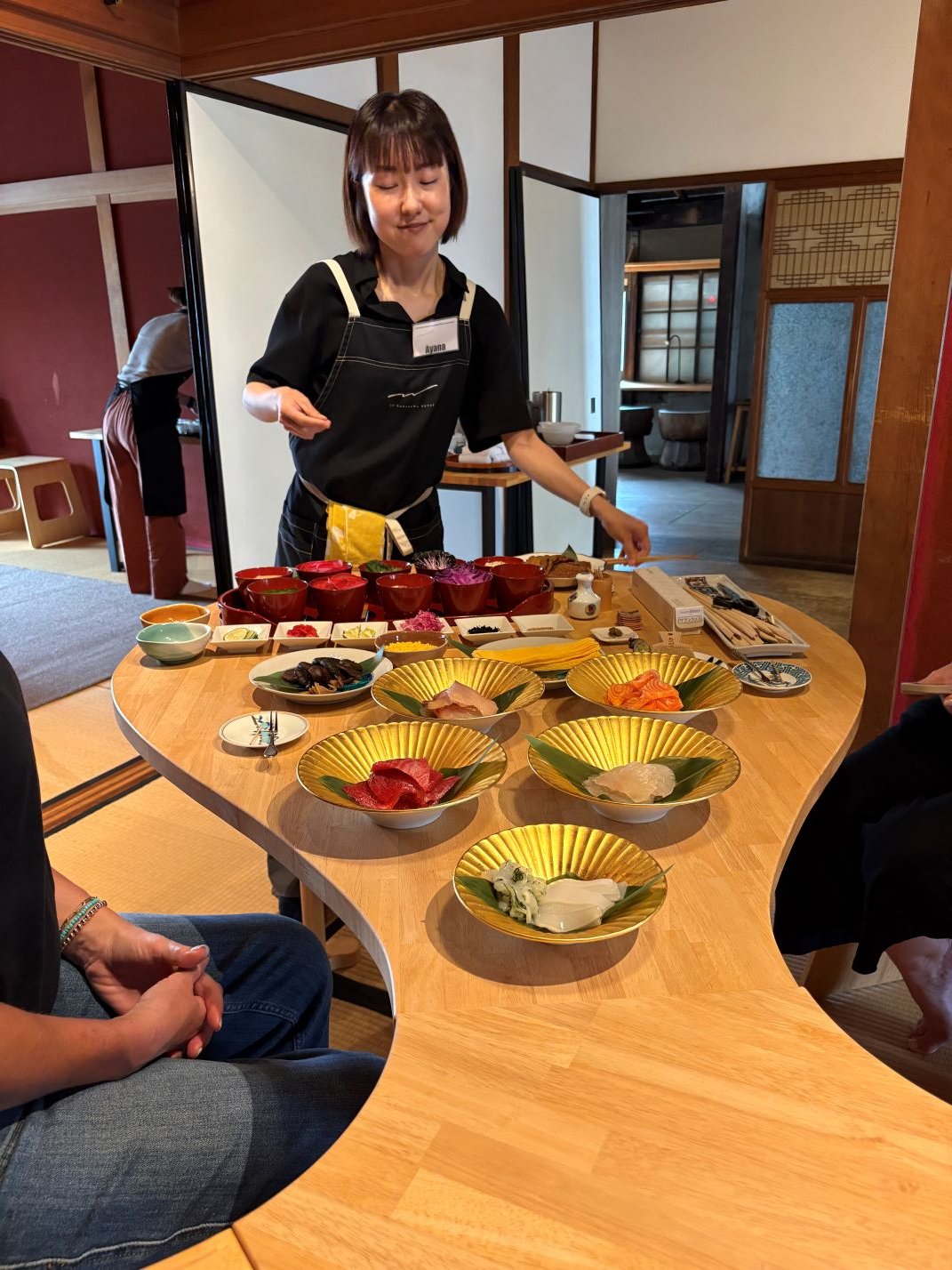
That afternoon, I was part of a small group that had a fabulous sushi-making workshop at In Kanazawa House. The ingredients we worked with were fresh and beautiful, and we got to taste everything before creating our sushi. I discovered myoga, which is a flower bud that tastes like a milder form of ginger. I absolutely love that ingredient and I miss it already! Another highlight was finally tasting real wasabi root. Did you know that what is sold as wasabi in most places in North America is actually mustard, lactose, and food coloring? I do not like spicy foods and do not like wasabi in North America, but it turns out that real wasabi root, simply grated and with no additives, is delicious! In the U.S., it looks like it is produced by some specialized farms on the West Coast, and I might splurge to have some shipped to me for a special occasion.
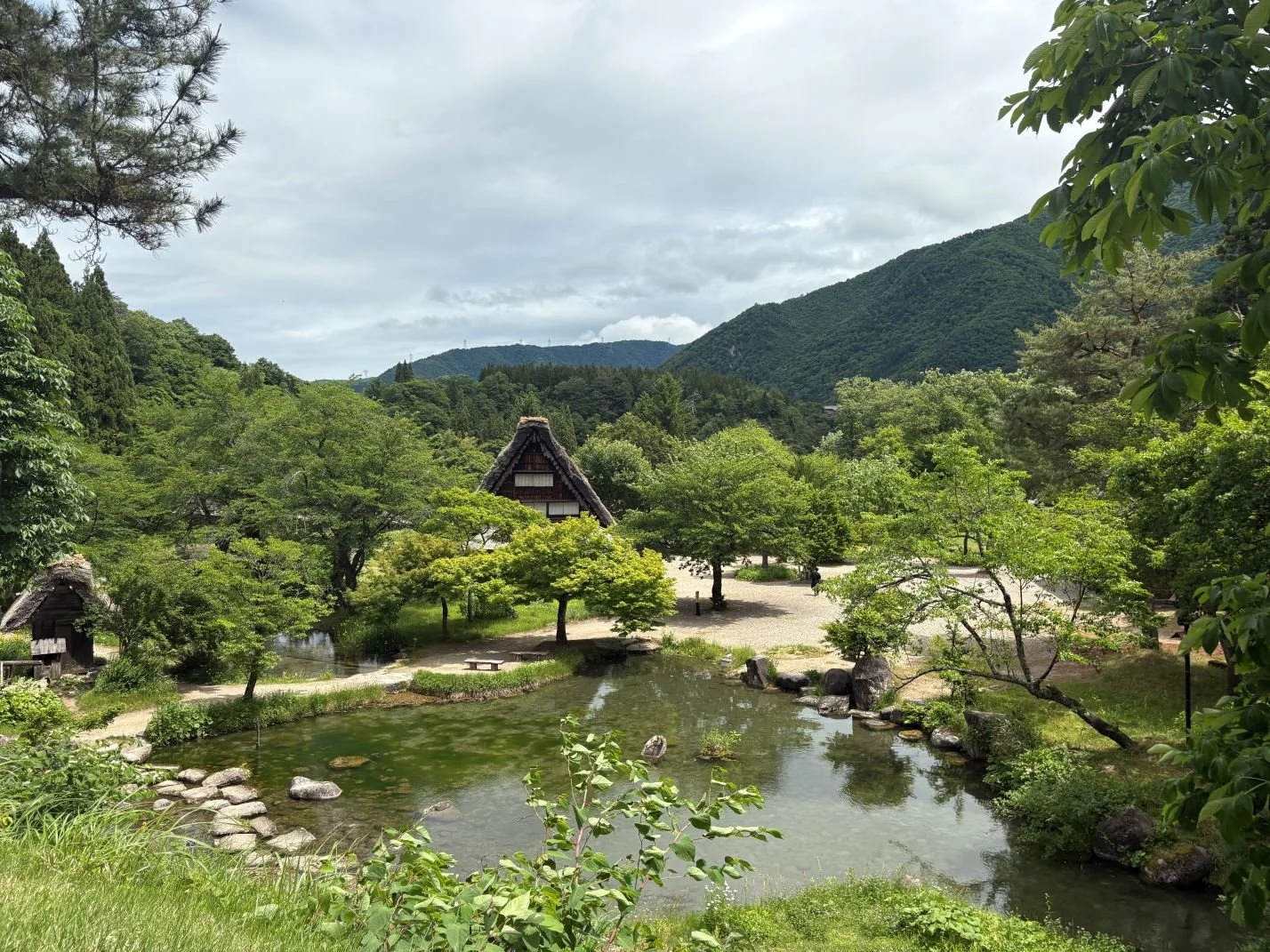
The next day, we visited Shirakawago, a UNESCO World Heritage site known for its traditional thatched roof houses. There is an open-air museum, which is quiet and lovely to visit, as well as a lively village with shops and restaurants across a pedestrian bridge.
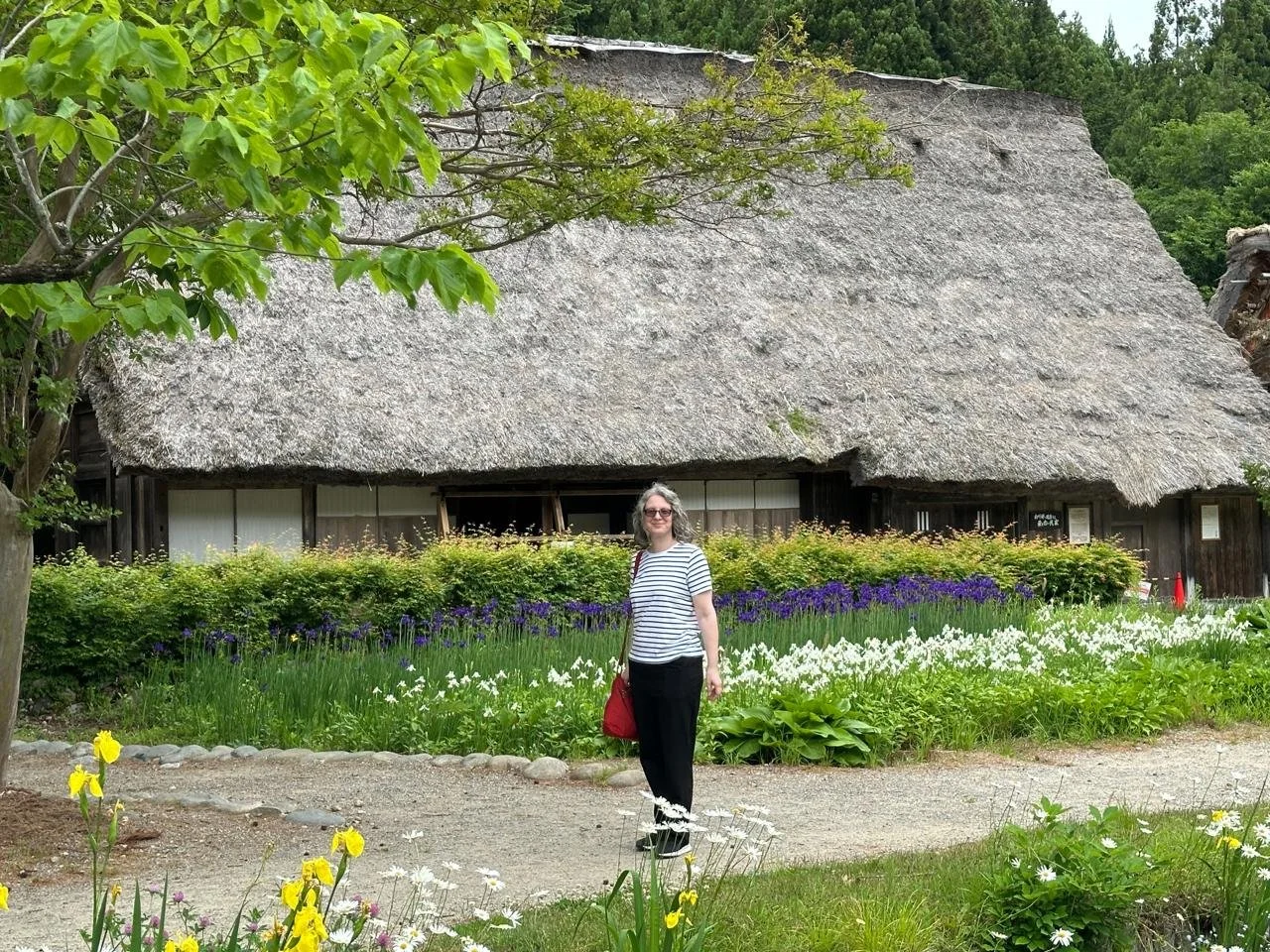
Photo courtesy of Renelyn Tan-Castillejos
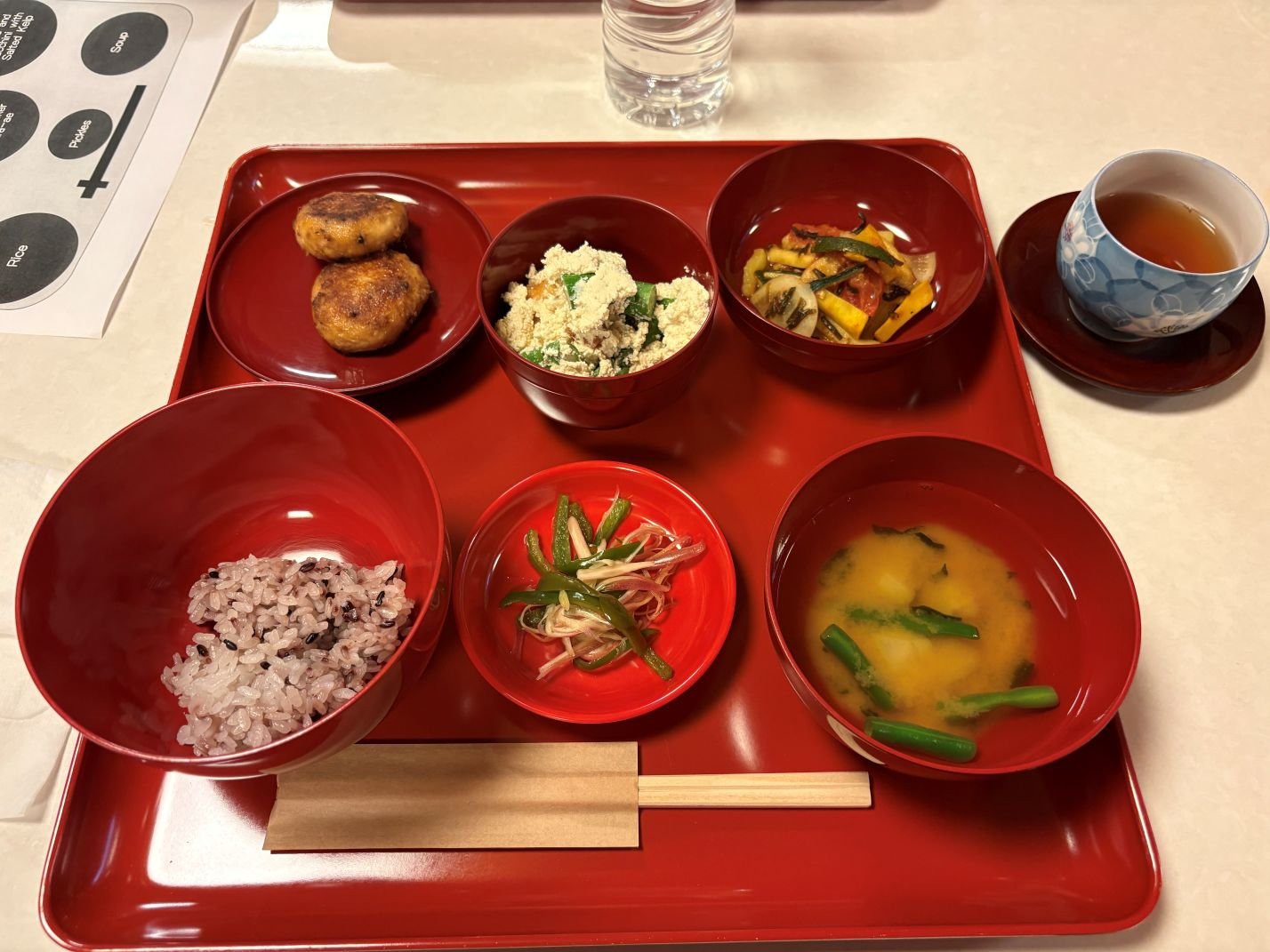
Finally, we went to Tokyo. We got to visit Akasaka Teran, where I had a yoga class followed by a shojin ryori (vegetarian Buddhist cooking) class. We also visited part of the private home of Masami Asao (the head monk, chef, and registered dietician). One thing that came out of the yoga class, and which could be applied to other contexts, is the phrase, “release your unnecessary energy.” In that case, it meant that we should get our wiggles out before settling down to focus, but I can see how I would apply that elsewhere!
For me, the highlight came that afternoon, with a kintsugi workshop given by Taku Nakano, a skilled (and remarkably young-looking!) artisan. Kintsugi is the Japanese art of repairing broken pottery with a mixture of sticky tree sap dusted with gold; it is rooted in the philosophy of wabi-sabi, which embraces impermanence and imperfection. One of the participants made a comparison to a really difficult experience she had gone through recently and which had left her feeling broken. But when you break a plate, it’s usually an accident and no one’s fault, really, and with kintsugi, instead of pretending like the plate wasn’t broken or getting rid of the plate, you actually highlight the breaks and imperfections and it makes the whole more beautiful. Again, there’s a life lesson in there if you care to look! I got to bring home the plate on which I worked, and it was a lovely experience.
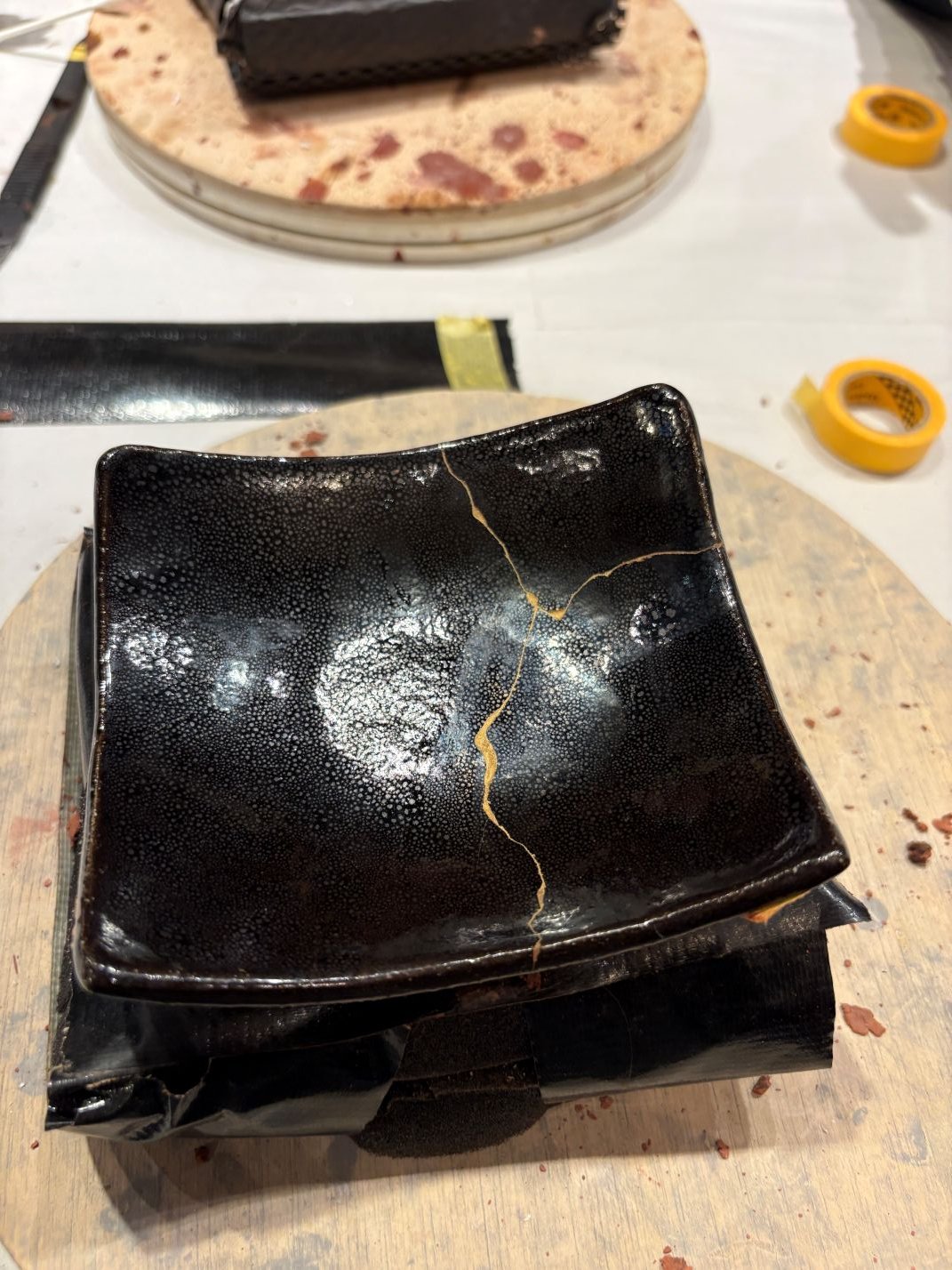
Finally, after the KonMari retreat, my roommate and I spent two more days in Tokyo exploring on our own. We went to Teamlabs Borderless; did some window shopping at Shinjuku Lumine; ate ramen, curry, and konbini egg sandos; and I went to a head spa. I have since looked it up and apparently, there are head spas in San Antonio, so I will have to try one out here! It was such a relaxing, blissful experience.

Photo courtesy of Ericka Lunbeck

Hi there! I’m Amélie, a professional home organizer in San Antonio, Texas. I help people like you declutter their home, organize their belongings, and simplify their life. I love cleaning out a closet and removing a carload of donations from a home! My goal is to help you create a functional space that will make your life easier and more peaceful.
Interested? Check out my personalized services or book your complimentary consultation!
Simplify
You know how there are some concepts that seem obvious if you’re very familiar with them, but to someone else, those concepts are not at all clear? I’ve had that experience recently when saying “less is more” and I was reminded that some things need explaining. I am going to use some client examples in this post, and I want to make it *abundantly clear* that I would never shame anyone; I am using these examples precisely because *they are so relatable*.
Some people have a lot of clothes. So many clothes that the baskets never empty, the clothes never all get put away, and there are always piles of stuff in the laundry room. Most often, these people feel overwhelmed by their laundry. And all too often, their reasoning is that since they have so much trouble finding clean clothes and putting together an outfit each day, the solution must be that they need *more* clothes. They are very taken aback when I tell them that the solution is actually that they need to *get rid of* a lot of clothes!
The shortest, least complicated way to get dressed is to have fewer options in our closet.
Shannon Leyko
Let’s take the example of socks. I worked with a not-atypical client who had three drawers full of socks in her closet, plus a few bins of orphaned socks elsewhere in the house. The drawers had the intention of order (lights, darks, and hosiery), but everything was pell-mell inside them, and there were many orphaned socks and strays in the wrong places, along with some mismatched socks paired together out of desperation. They had taken over too much space and were a thorn in my client’s side each day because it was so hard for her to find what she wanted!
Now, how many socks does one person need? It depends. I mean, I would say that since there are different seasons, it is absolutely appropriate to have wool socks that you only wear in the winter and cotton socks for the summer. Life also presents different types of occasions, so sure, you might need knee-high stockings, black dress socks, white crew socks, ankle sports socks, and a pair of ugly Christmas socks thrown in for good measure. I’m all for variety!
Here’s what happened with this client: Even when I pointed out socks with holes or stains, my client did not want to get rid of them or thought she would need to replace them, because she was in a scarcity mindset. The remedy was easy, if a bit tedious: sort through all the socks, pair them up properly, then organize them by type/length/color. From that point on, not only were they easy to find, but she could see what she had at a glance! At the beginning of the session, she was afraid that she couldn’t get rid of any knee-high stockings, and that was because she genuinely couldn’t always find a pair when she needed one. But once we were done, she had enough to wear a different pair every day for almost three weeks if she had wanted to, and that is when she was able to let go of the excess.
Order allowed her to simplify, and simplifying made her life easier.
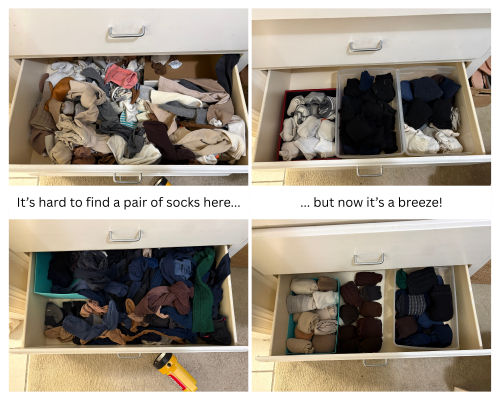

Let’s use another example inspired by a different client. Imagine doing a load of laundry and ending up with (among other things) 43 socks; after putting some order in things, you determine that you have 11 orphans and 16 pairs, each of them different. Now imagine instead doing a load of laundry and ending up with 14 socks, comprised of 7 pairs, 5 of which are identical. Isn’t sorting (and putting away) the second load so much easier? The way you get there is by having fewer socks, doing a load every week, and buying bundles of identical pairs whenever possible. David Tennant gets it!
And when this client realized that even if we did match all the orphaned socks that had accumulated, the drawer wasn’t spacious enough for them, her reaction was to say that she would need to purchase more storage. And I said that actually, her storage was fine, it was just that she had too many socks! It just felt like it wasn’t enough because they didn’t get put away properly once they were clean, and again, that’s easier to do with fewer socks.
Because here’s the thing: The fewer items you have to manage, the less energy it will take from you – and therefore the more energy you have for important things. You can pare down to the essentials, switch to only one sock color, limit the number of special-occasion socks, and simplify both your closet and your life.
By the way, it’s easier to keep up than it is to catch up. That’s why clients hire me to help them catch up – then they are set up for success!
Here are some tips for success: It’s not about how many socks you can fit in your space or how many you could afford to buy; it’s about how many will make your life more manageable. To translate this more broadly, build a system that meets you where you are today. Which routines feel easy? Which routines (or spaces) do not serve you? What drains you and what would you need to feel better about it?
Hi there! I’m Amélie, a professional home organizer in San Antonio, Texas. I help people like you declutter their home, organize their belongings, and simplify their life. I love cleaning out a closet and removing a carload of donations from a home! My goal is to help you create a functional space that will make your life easier and more peaceful.
Interested? Check out my personalized services or book your complimentary consultation!
Dr. Paul Conti, Marie Kondo, and happiness
A colleague mentioned Dr. Paul Conti recently. As a psychiatrist, Dr. Conti emphasizes that a key component of happiness is the balance between agency and gratitude. He suggests that when individuals have a sense of agency, i.e. the ability to make choices and take meaningful actions in their lives, paired with a practice of gratitude for the positive aspects of their experiences, it can lead to increased levels of happiness and well-being.

Dr. Paul Conti; Image from Pacific Premier Group, PC
It struck me that this is basically the KonMari Method™! Marie Kondo encourages us to intentionally shape our own lives, make decisions that align with our values, and take control of our circumstances. This sense of control and autonomy can contribute to a greater sense of fulfillment and satisfaction. It isn’t just about decluttering – sure, we should only keep objects that spark joy, but this is all in pursuit of kurashi, or ideal lifestyle. Curating our homes can help curate the life we want to lead.

Marie Kondo; Photo courtesy of KonMari Media, Inc.
Additionally, practicing gratitude involves acknowledging and appreciating the positive aspects of life (including objects, at least in Shintoism), even in the midst of challenges or difficulties. Cultivating a mindset of gratitude, or even mindfulness, can help individuals focus on what they have rather than what they lack, fostering a sense of contentment and happiness. I also love looking for glimmers, or small moments to appreciate.
Overall, Dr. Paul Conti's work, as well as Marie Kondo’s, emphasizes the importance of finding a balance between taking action to create the life you desire (agency) and recognizing and appreciating the good things that already exist in your life (gratitude). Both are key ingredients for experiencing happiness and well-being.