
Do we really have 300,000 items in our homes?
You’ve probably heard that number being floated around: the average household contains 300,000 items. But does it really? It turns out I have a bit of inside information, as well as some thoughts, so here we go!
That number actually comes from a NAPO colleague of mine, Regina Lark, who was quoted in the LA Times in 2014 saying that the average house contains 300,000 items. I attended one of her webinars last month, where she explained that when asked, she said that she got the number from the UCLA’s 2012 book Life at Home in the Twenty-First Century – which I happened to be reading at the time! And then, try as she might, she was never able to find that reference, although she is convinced that she did read that number somewhere and did not make it up. I also could have sworn that it was in that book, but when I looked for it, I couldn’t find that figure either. However, her quote has since taken on a life of its own and is, to this day, being repeated everywhere as truth, probably because the LA Times is an important publication.
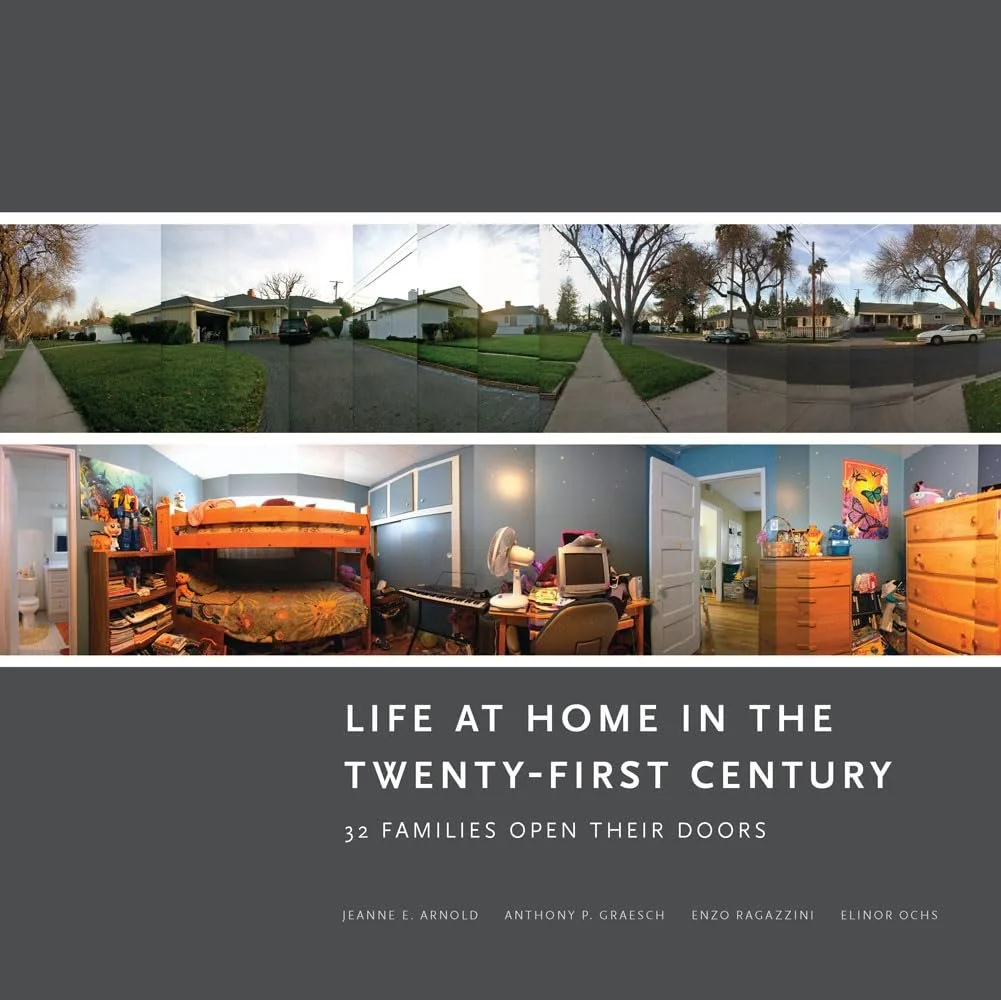
So, the book was published after UCLA conducted a great anthropological study with 32 American families in 2012, and they talk a lot about their methodology. They did count objects, but it was more of an estimate: they made educated guesses about certain groups of items, and they only ever counted items in plain sight – meaning that anything that would have been in a drawer, in a cabinet, or behind something visible was not counted. Here are some figures from that study, along with a quote that will not surprise you: “Middle-class America has the most possessions per family in history.” Households surveyed had an average of 438 books and magazines, 139 toys, and 39 pairs of shoes per family (again, these are only visible items). In home offices, the lowest number of plainly visible non-paper objects was 21, and the most was 2,337. In the garage, it ranged from 50 to 650. Having more items on one’s refrigerator (magnets, papers, etc.) was correlated with having more objects in the home. But there is no total anywhere in sight!
Now, here’s where my opinion comes into play. Let’s be generous by rounding up and saying that a person lives for 30,000 days. From those days, we wouldn’t really count childhood, so there’s maybe 25,000 days left? Let’s say the average household has two adults, and they are acquiring objects not just for themselves, but also for their 2.5 kids. Okay. So with my rough mathematical model here, those adults would have to acquire (while never discarding!) about 12 items each day in order to have 300,000 by the end of their life, right? So it would have to be an even faster rate of acquisition in order to have that many items while their kids are still living with them, as in the UCLA study. I’m not counting perishable items like groceries or cleaning products in this tally, and I wouldn’t be counting every last piece of paper either, since the UCLA anthropologists didn’t.
Speaking for my household, we are not acquiring items at nearly that rate. Sure, there are isolated times when I will buy a lot at once. For example, in one shopping spree, I could buy several outfits for my kids to go back to school as they grow, along with school supplies. But on an average day, I am not buying anything. And regardless of how much I buy, I do get rid of some items along the way (like the kids’ clothes that have been outgrown, plus the school supplies that get used up).
All this to say that while I do not have any idea how many items are in my household, and while I’m sure the number would seem very large if I were to learn it, I don’t think it’s anywhere close to 300,000!

Hi there! I’m Amélie, a professional home organizer in San Antonio, Texas. I help people like you declutter their home, organize their belongings, and simplify their life. I love cleaning out a closet and removing a carload of donations from a home! My goal is to help you create a functional space that will make your life easier and more peaceful.
Interested? Check out my personalized services or book your complimentary consultation!
The junk drawer
I recently saw this Etsy listing for a junk drawer starter kit, containing batteries, rubber bands, matches, a screwdriver, a flashlight, scissors, tape, and a pen. At first I laughed, but then realized that the things in there were useful and, therefore, this was not necessarily a gag gift. But it also made me want to define exactly what a junk drawer is.

Photo taken by Karolina Grabowska for Pexels.
According to Wiktionary, a “junk drawer” is a “drawer designated for the storage of various miscellaneous, small, occasionally useful items of little value.” The reason I don’t really like the term “junk drawer” is because to me, “junk” makes it sound like useless stuff, whereas in people’s homes, the contents of the junk drawer are actually useful!
The mid-century modern furniture company Joybird conducted a survey of 1,900 people in 2020 and determined the top 10 items that people keep in their junk drawer, which are (in order): tape, pens, spare batteries, scissors, flashlights, glue, paper clips, matches, rubber bands, and keys.

Infographic reprinted with permission from Joybird.
So here’s the thing: even though I consider myself to be someone who does not have a junk drawer, I do have all of these items in my home – they are just not stored together. I have a home office (albeit in an open area), so office supplies like tape, pens, scissors, glue, and paper clips are stored there. I keep the flashlight and spare batteries in the hall closet, the rubber bands in the pantry, and the matches (along with birthday candles) in a high cupboard out of reach of the kids. In the kitchen, I do have a small drawer of miscellaneous useful items such as masking tape and a marker (to label things going into the freezer), kitchen twine, bag clips, and a first aid kit, but to me that’s a utility drawer, not a junk drawer. It’s all in the wording, right?
The important thing is for every item to have a place, so that you know just where to look for them (and put them away). I love using small trays such as these to corral small items in place. Small trays allow you to customize your drawer, and designating a home for your items keeps order in the drawer and helps you find things more quickly. You can also use small boxes, lids, or even mismatched saucers. If you’re like me and like to label all the things, consider clip labels made specifically for drawer organizers! Labels aren’t necessarily for you so much as for the other members of your household to know where to put things back, instead of just tossing them in there and shutting the drawer.
Here’s to making peace with your junk drawer!